Fragmented: every team held one piece.
Sales, operations, kitchen, front office and finance relied on separate messages, notes and spreadsheets - often held together by one event manager.

Events can be one of the most profitable parts of a hospitality business. They can also become one of its most chaotic.
We structured the work into clear, delegable parts while preserving a shared view of what was promised, what was delivered, what was paid and what is still due.
Inntelligent is a multi-tenant SaaS platform for hotels, restaurants and SPAs. It connects reservations, accommodation, F&B, SPA, CRM, billing, payments and daily operations; this work evolved its existing event module into a more complete workflow.
View the full platform case study →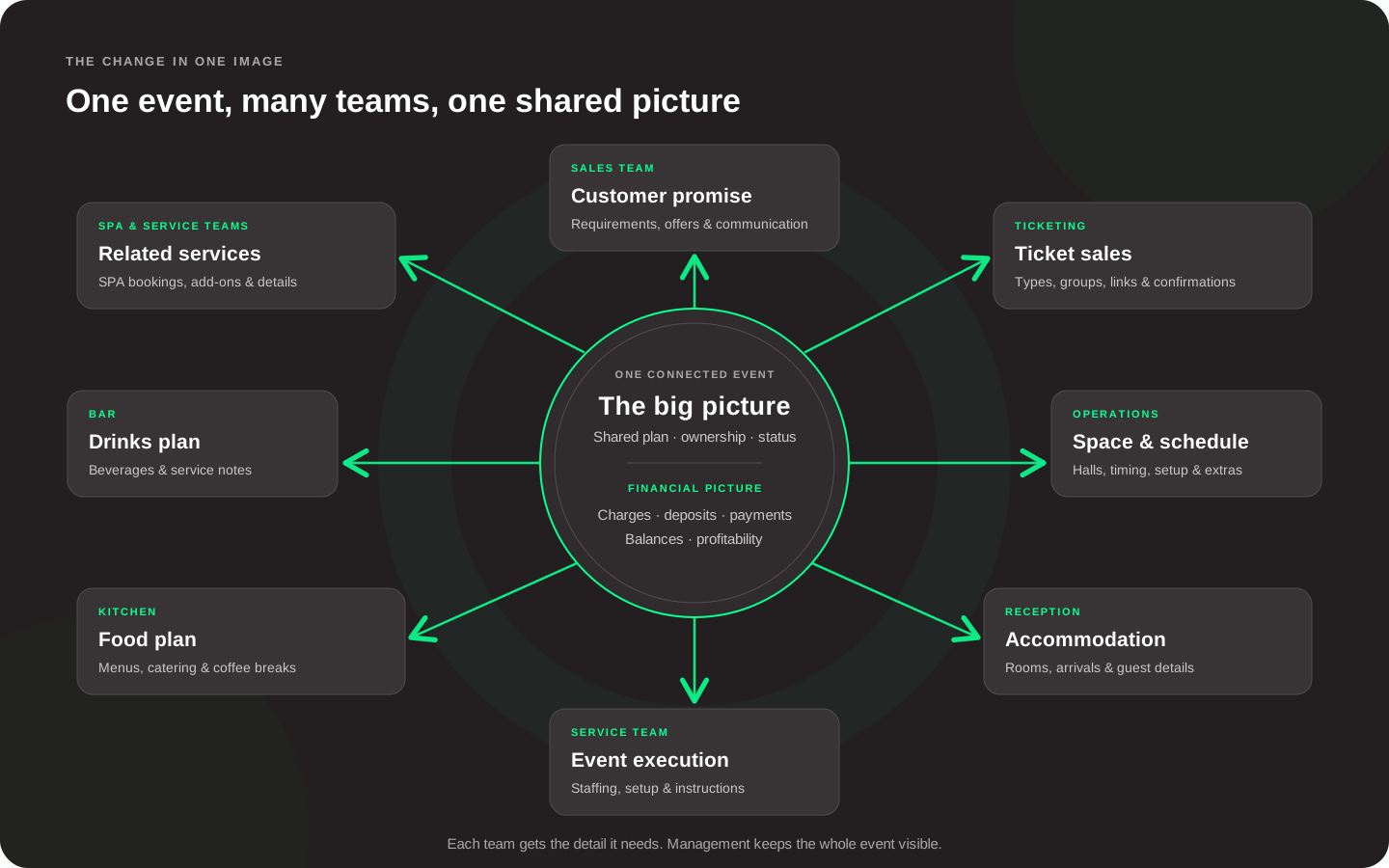
The goal was not to pretend events are simple. It was to make their complexity manageable.
Sales, operations, kitchen, front office and finance relied on separate messages, notes and spreadsheets - often held together by one event manager.
Dedicated work areas make execution easier to delegate, while shared operational and billing views keep the event whole.
A hotel, venue or resort may earn from the hall, food, drinks, coffee breaks, accommodation, spa services, deposits, tickets and follow-up billing. On paper, events are an obvious growth area. In practice, every new revenue line adds another moving part.
An event is rarely a single booking. Sales needs clarity on what was promised. Operations needs a usable schedule. Kitchen and bar need precise instructions. Front office may need to coordinate rooms. Finance needs to know what is included, what is paid and what remains due. Public ticket sales and individual attendee payments add another layer.
Events naturally split into smaller tasks, but that creates a new risk: once the work is divided across teams, nobody has a dependable shared picture. Important details end up in calls, chat threads, spreadsheets, handwritten notes or one person’s memory.
Then the cracks appear. A catering note misses the kitchen. Accommodation changes do not reach front office. A charge is agreed but never billed. Tickets are sold without a clear payment status. Each team sees its own task, but no one sees the whole event.
Inntelligent does not simplify events by pretending they are simple. The event workspace reflects their real structure: the event summary, hall bookings, accommodation, staff details, custom charges, deposits, ticket types, ticket sales and payments each have a clear place.
That separation lets the right role handle the right work at the right time. Operations can focus on timing and setup. Commercial teams track commitments. Finance follows charges and collections. Ticket work can progress without overloading the rest of the event plan.
The result is not merely a cleaner interface. It is work that can be delegated - the foundation for running more events without requiring one person to hold every detail in their head.
Teams work in focused areas, while shared views reconnect the operational and financial details.
Public event links, ticket types and customer conversations capture what is being promised.
Halls, schedules, accommodation, menus, coffee breaks, extras and staff details take shape.
The prayer sheet turns the plan into clear instructions for every team involved.
Deposits, payment links, grouped tickets and partial payments stay visible as money comes in.
The event bill brings charges, payments and outstanding balances back into one financial picture.
Dividing the work is only half the answer. Without shared views, the business simply ends up with better-organized fragmentation. Inntelligent brings the pieces back together through two complementary views.
The prayer sheet is the operational picture. It shows responsibility, customer context, schedule, internal notes and what kitchen, bar and service teams need to know across spaces, extras, menus, coffee breaks, accommodation and related services. A complicated event becomes something people can execute.
The event bill is the financial counterpart. Hall usage, extras, food, tickets and other commercial pieces remain distinct while rolling into one answer: what was sold, who is paying, what is covered and what still needs attention. The work is delegated, but it is not disconnected.
Ticketed events introduce their own complexity. Attendees may pay individually or in groups, settle only part of a balance, need confirmation emails or require follow-up. When ticketing lives outside the event workflow, visibility drops and reconciliation work grows.
Ticket types now belong to the event itself. Tickets can be grouped when they should be billed together and split when they need to become individual records. Selectable payment flows and partial-payment tracking reflect how money actually arrives, rather than assuming one clean transaction.
Event-specific email flows give communication the same structure. Teams can see which tickets are paid, partly paid, grouped, outstanding or awaiting follow-up without rebuilding that picture from another tool.
The pieces are delegated, but the event - and its financial picture - stays whole.
This work improves more than administration. Clear ownership helps teams respond faster, make fewer assumptions and miss fewer handoffs. Responsibility can move to the right people without management losing oversight, even as the event becomes more complex.
The organizer experiences a business that feels organized. Staff work from clear instructions. Finance sees cleaner money flows. Management gets a truer view of profitability. The venue can treat events as a repeatable revenue engine rather than a series of stressful one-offs.
The most profitable areas of a business are often the ones most likely to become operationally messy. Events create revenue precisely because they combine many services - and that same combination makes them difficult to manage.
The answer is not to flatten the complexity away, but to structure it. Inntelligent turns event work into clear, delegate-friendly parts while preserving the two views that matter most: the operational picture and the financial picture. That combination is what makes event business sustainable.
Tell us where coordination becomes fragile. We’ll help design a workflow your teams can own without losing sight of the whole.