Before: orders lived in conversations.
Calls, chat threads and ad hoc notes had to be interpreted, checked and re-entered before anyone could prepare or deliver an order.

Wholesale orders were scattered across messages and manual handoffs, with no reliable path from “we need this” to “it’s on the way.”
We solved the problem in a week by connecting customer intake, staff approval, optional automation and delivery execution into one B2B workflow.
Дюкян (Dyukyan) is a modular SaaS platform for shops, warehouses and producers. It manages point of sale, products, inventory, customers, suppliers, production and deliveries; this update streamlined the wholesale orders process - from customer-facing wholesale requests to driver distribution.
View the full platform case study →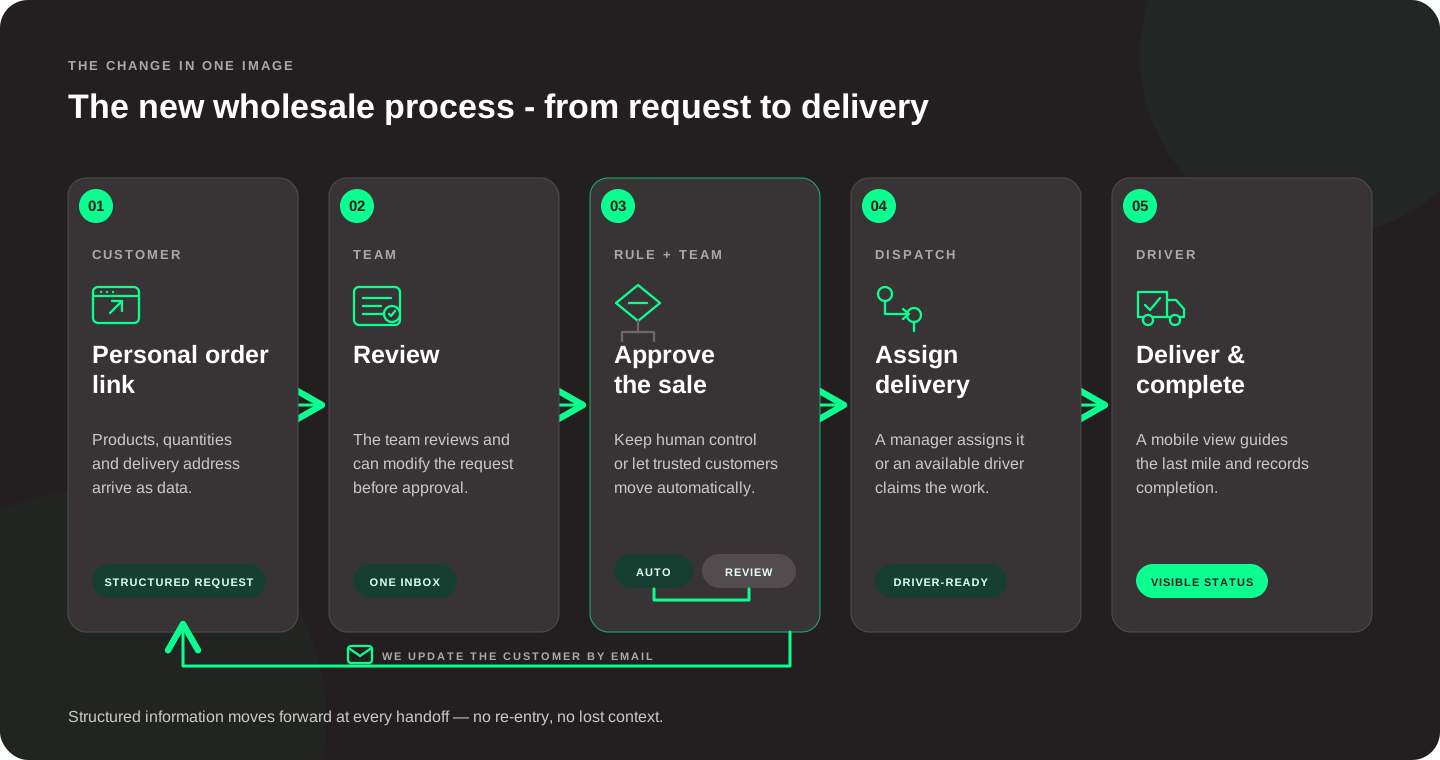
We turned scattered pieces into one streamlined operational process.
Calls, chat threads and ad hoc notes had to be interpreted, checked and re-entered before anyone could prepare or deliver an order.
A structured request enters a shared inbox, becomes an approved sale and continues into delivery assignment and completion.
For many growing food producers, bakeries, specialty retailers and wholesalers, the hard part is not winning business customers. The hard part starts after that.
A loyal customer wants to place repeat orders quickly. They may need different delivery locations, negotiated pricing, recurring product mixes and dependable delivery windows. Yet those orders often arrive through a phone call, a chat app or a familiar sales representative who “just knows” what the customer meant. That works until volume increases, staff changes or delivery coordination gets complicated.
Every informal order creates a chain of manual work. Someone reads the request, checks pricing and availability, interprets the destination, enters the order again and makes sure the right person delivers it. If that person is absent or busy, the chain slows down. Customer-specific pricing and special handling only increase the room for error.
The pressure is greatest for businesses that produce to order or deliver across multiple client locations. They balance retail and wholesale stock, coordinate drivers and decide which requests can move immediately and which need review. Here, process design matters more than raw feature count.
The first shift in Dyukyan is how orders enter the system. Each business customer can receive a direct request link and submit a structured order in a browser, without being forced through a consumer checkout flow. They see the products and pricing relevant to them and send the request in a consistent format.
The request is no longer just a message. It becomes operational data: selected items, quantities, notes, timing and delivery destination. The flow also respects how B2B trading actually works, including customer-specific prices, discounts and delivery arrangements.
Availability is handled with the same operational context. The flow can distinguish between stock that is listed and stock that is safe to promise after retail reserves are considered, reducing the risk of accepting an order that cannot really be fulfilled.
Each stage hands structured information to the next, so the team does not have to reconstruct the order at every step.
The customer uses a personal link to choose products, quantities and a delivery destination.
Staff review and can modify the complete request, customer context, totals and delivery details in one shared inbox.
The request is accepted, rejected or automatically approved for a trusted customer.
Approved work enters a delivery screen where a manager can assign it or a driver can claim it.
The driver works from a mobile-friendly view and marks the delivery complete.
Submitted requests now arrive in a dedicated review area rather than disappearing into chat history or somebody’s memory. Staff can see the status, customer, item details, totals, destination and whether the request is waiting, accepted or rejected. The system becomes the shared account of what happened.
Dyukyan also supports optional automatic acceptance per customer. Long-standing clients with predictable orders can move faster, while requests with variable pricing, stock or delivery commitments still receive a human check.
Trusted customers’ requests can therefore become sales without repeated re-entry, while the business keeps control where judgment matters. This saves more than clicks: it shortens response time and lets the service feel faster and more dependable.
Order intake was not treated as a separate problem from dispatch. Once a request becomes an approved sale, the same flow continues into who will deliver it, how the work is distributed and whether it has been completed.
A dedicated delivery screen gives managers a structured way to allocate work. Drivers get a simpler, mobile-friendly experience, including personal-link access that avoids unnecessary login friction. That matters in real operations: drivers are moving, often using a phone, and need clarity rather than the full manager back office.
Assignment, claiming and completion behavior turn the handoff into a visible part of the system. Dyukyan moves beyond order capture and into service fulfillment.
The order no longer disappears into a conversation. It keeps moving until the delivery is complete.
For wholesale and repeat commercial customers, dependable ordering is part of the product. They remember whether ordering feels easy, whether pricing is consistent and whether deliveries arrive as expected. They also notice when every repeat order requires another round of clarification.
Connecting structured requests to delivery execution reduces coordination overhead, lowers the risk of transcription mistakes, gives managers better visibility and helps drivers work from cleaner information. The customer experiences a service that feels faster and more professional.
That effect compounds. A merchant or producer can handle greater volume without administrative effort growing at the same rate. More customers, delivery points and daily orders no longer mean proportionally more messages and manual handoffs.
The strength of this rollout is its shape, not just its feature count. It spans customer intake, staff review, automation rules, delivery operations and public B2B positioning. The website now explains the workflow as a product capability rather than leaving it as an internal workaround.
That breadth shows a product maturing around a real commercial process. For wholesalers, food producers, bakeries and delivery-led retailers, it is the difference between software that merely records work and software that helps the work move.
Tell us where the handoffs break down. We’ll help turn the scattered steps into a workflow your team can rely on.